Where to Stay in Bangkok: Best Areas for First-Time Visitors in 2026

Bangkok has more accommodations than almost any city in Southeast Asia, and choosing the wrong area can make the city feel overwhelming very quickly. When choosing where to stay in Bangkok, the best place usually has less to do with how it looks online and more to do with how easy it is to get around once you arrive.
For most travelers, staying somewhere with good transport, plenty of food nearby, and simple routes across the city makes a much bigger difference than the accommodation itself. Areas like Sukhumvit, Siam, Silom, the riverside, Chinatown, and Old Town can all be good bases. They just work better for different kinds of trips.
I’ve live in-and-out of Bangkok for the last three years, and I’ve seen where first-time visitors tend to get stuck. This guide narrows it down to the areas that make daily travel feel easiest.
TLDR: Best Areas in Bangkok for First-Time Visitors
Start with how you want your days to feel. Each neighborhood offers something different, and the best area to stay in Bangkok depends on your travel style, not the price of your accommodation.
- Best overall for most trips: Sukhumvit
- Best for families and short stays: Siam
- Best for easy transport and park access: Silom
- Best for calm mornings and river views: Riverside
- Best for street food and atmosphere: Chinatown
- Best for temples and historic sights: Old Town
- Best backpacker area: Khao San (noisy, but budget-friendly)
If you only read one section, read Sukhumvit first. It’s the easiest default.
Map of Bangkok Neighborhoods
Best Areas for First-Time Visitors (By Neighborhood)

Sukhumvit (Asok, Phrom Phong, Thonglor, Ekkamai)
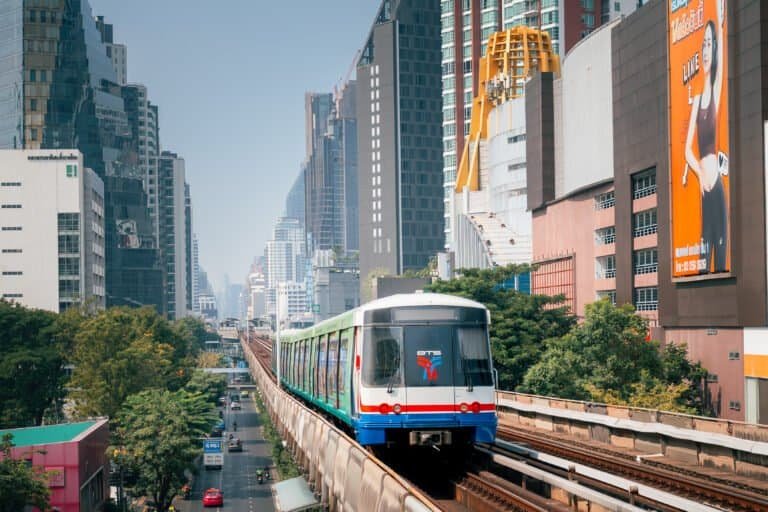
Sukhumvit is the easiest area in Bangkok for first-time visitors. It runs along both the BTS and MRT, has food everywhere, and makes moving around the city far simpler than most other neighborhoods. If you want an area where navigation feels straightforward from day one, start here.
Atmosphere
Modern, busy, and international. Sukhumvit mixes malls, cafes, bars, street food, and residential side streets. Evenings are lively, but most areas feel organized and easy to navigate rather than overwhelming.
Who Sukhumvit is best for
Sukhumvit works well if you want:
- A simple first trip with minimal confusion
- Fast BTS and MRT access
- Food within a short walk at almost any hour
- Easy routes to Siam, Silom, and Old Town
- A balance of comfort and convenience
Why stay in Sukhumvit
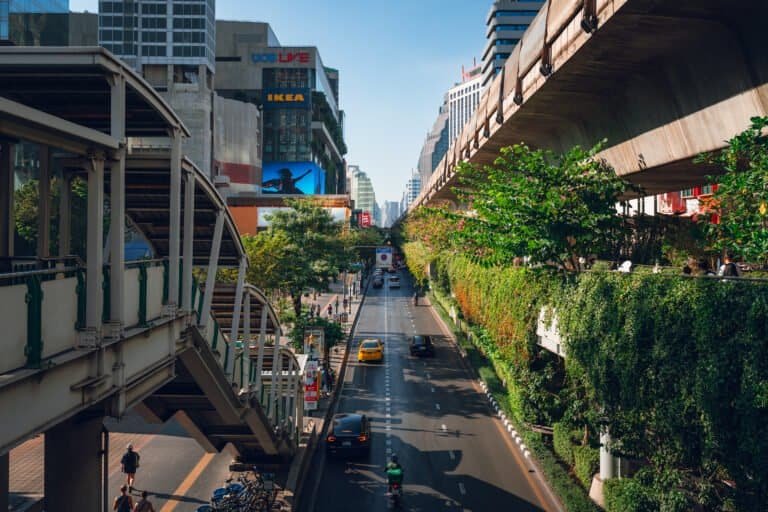
Wide sidewalks, clear signage, and direct train lines cut travel time across the city. Most first-time visitors want to step outside and immediately find food, transport, and clear routes. Sukhumvit delivers that better than anywhere else.
What to know
Sukhumvit is busy and very urban. Traffic slows to a halt during peak hours, and the area lacks the historic charm found in Old Town or along the river. Red-light areas near Nana Plaza and Soi Cowboy are easy to avoid but worth being aware of, especially if you are traveling with family. If you prefer quieter streets or a more traditional feel, Riverside or Old Town may suit you better.
Transport
Sukhumvit is one of the best-connected areas in Bangkok.
BTS Asok + MRT Sukhumvit (interchange), BTS Phrom Phong, BTS Thonglor, and BTS Ekkamai make this one of the easiest areas in the city to get around from.
Sukhumvit at a glance
- One of the easiest areas for getting around Bangkok
- Best for first-time visitors who want flexibility and simple daily movement
- Food options are everywhere, from street stalls to malls and cafes
- Busy and modern, with less traditional character than Old Town or the riverside
- Works best if you stay close to Asok, Phrom Phong, Thonglor, or Ekkamai stations
If you want your days to feel easy, with minimal planning and convenient transport, Sukhumvit is hard to beat.
Bangkok riverside (Chao Phraya River area)
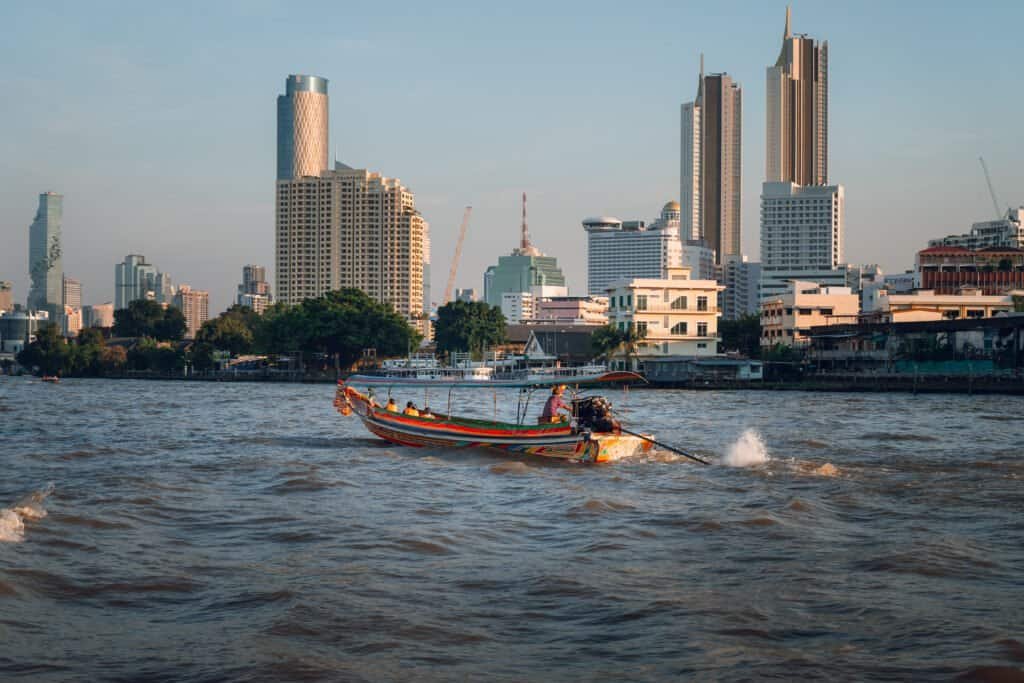
The riverside is one of the calmest places to base yourself in Bangkok. It runs along the Chao Phraya River and feels slower and more open than most parts of the city. If you like quiet mornings, scenic views, and a relaxed pace after busy sightseeing days, the riverside can be a good fit.
Atmosphere
Calm, spacious, and scenic. The riverside feels removed from the city’s traffic and density, with wide views over the water and a slower daily rhythm. Evenings are especially peaceful, with ferries and longboats moving across the river and far less street noise than in central neighborhoods.
Who the riverside is best for
The riverside works well if you want:
- A quieter base away from traffic and crowds
- Scenic views and slower mornings
- Easy ferry access to temples and historic sights
- A more relaxed end to the day after exploring
- It suits travelers who value calm and comfort over speed and walkability.
Why stay on the riverside
This area is a good choice if you plan to spend time visiting temples, taking river ferries, or enjoying slower-paced days. Being close to the water makes sightseeing feel less rushed, especially when using boats instead of taxis during busy hours.
If the idea of starting or ending your day near the river appeals to you, the riverside offers a very different experience from Bangkok’s busier neighborhoods.
What to know
The riverside is scenic, but not the most central place to stay. Most bases rely on shuttle boats or taxis to reach BTS or MRT stations, and travel times can increase during peak hours.
Food options are more spread out than in areas like Sukhumvit or Siam, and prices tend to be higher near the water. If quick transport and walkable food are priorities, other neighborhoods may feel easier.
Transport
Chao Phraya River ferries are the most practical way to get around from this area.
Many properties offer shuttle boats to nearby transit points, including:
- BTS Saphan Taksin
- Central Pier
- Iconsiam
Taxis and Grab are available, but traffic along the river moves slowly during busy times.
Riverside at a glance
- One of the calmest areas to base yourself in Bangkok
- Best for travelers who value quiet, views, and a slower pace
- Easy ferry access to temples and historic areas
- Less central, with longer travel times to other parts of the city
- Works best if you are comfortable using boats or taxis
If you want peaceful mornings and scenic evenings, and do not mind slower transport, the riverside can be a rewarding place to stay.
You can purchase Chao Phraya river ferry tickets ahead of time to avoid long lines at the ticket counter, but tickets do no need to be purchased in advance.
Siam (central and family-friendly area)
Siam is Bangkok’s most central and walkable area. It is filled with shopping malls, indoor attractions, and excellent BTS access, which makes it one of the easiest bases for short trips and families. If you want a modern area where everything is close together and simple to navigate, Siam is a strong option for first-time visitors.
Atmosphere
Bright, modern, and energetic. Siam is dominated by large malls, food courts, cinemas, and indoor spaces that offer an easy break from the heat. In the evenings, Siam Square becomes a lively pedestrian area with small shops and a younger local crowd, but it generally feels busy without being chaotic.
Who Siam is best for
Siam works well if you want:
- A very central, walkable base
- Simple navigation with minimal planning
- Easy access to shopping, dining, and indoor activities
- A good setup for families or short stays
It is especially convenient if you prefer staying close to major transit hubs and spending less time commuting.
Why stay in Siam
This is one of the easiest areas in Bangkok if you value convenience above all else. You can walk between malls, find quick meals at almost any hour, escape the heat indoors, and reach the BTS in minutes.
For short trips, Siam works well because you spend very little time traveling between places. Daily life here feels straightforward and efficient.
What to know
Siam is busy, particularly on weekends when locals come to shop or meet friends. The area has a very modern, commercial feel and less traditional street life than neighborhoods like Old Town or Chinatown.
If quiet evenings or a more local atmosphere matter to you, Sukhumvit or Silom may be a better fit.
Transport
Siam has some of the best BTS access in Bangkok.
- BTS Siam
- BTS National Stadium
From here, it is easy to reach Sukhumvit, Silom, and river connections. Taxis and Grab are widely available, but traffic around major malls slows during peak hours.
Siam at a glance
- One of the most central and walkable areas in Bangkok
- Best for short stays, families, and travelers who value convenience
- Excellent BTS access with easy connections across the city
- Busy and modern, with fewer traditional streets
- Works best if you like everything close together and easy to navigate
If your priority is minimizing stress and keeping daily plans simple, Siam is one of the easiest places to base yourself.
Silom (Lumphini Park, Sala Daeng, Chong Nonsi)
Silom is Bangkok’s business district by day and a surprisingly calm place to base yourself by night. It offers excellent transport, access to a large green park, and a central location that makes getting around the city easy without feeling overwhelming.
Atmosphere
Office towers mixed with leafy side streets and one of the best parks in Bangkok. Around Lumphini Park, mornings and evenings feel relaxed and local. Near Sala Daeng and Chong Nonsi, the area feels more like a low-key city base than a nightlife hub.
Who Silom is best for
Silom works well if you want:
- Easy access to both BTS and MRT lines
- A large park nearby for walks or runs
- Calm evenings without feeling isolated
- A central base with quick routes to other areas
It is a strong option if you want balance rather than buzz.
Why stay in Silom
For many first-time visitors, Silom is one of the most practical all-around bases. You are close to major transport lines, one or two stops from Siam and Sukhumvit, and within easy reach of the river.
Daily life here feels manageable. You can explore all day, then return to quieter streets at night.
What to know
Parts of Patpong are still known for red-light nightlife, but those streets are easy to avoid. Main roads can feel busy during rush hour.
While food options are good, you may need to walk a bit more to find standout spots compared to Chinatown. If your priority is nightlife or being right next to major sights, another area may suit you better.
Transport
Silom is one of the easiest areas in Bangkok for getting around.
- BTS Sala Daeng connects you to Siam and Sukhumvit
- MRT Silom and MRT Lumphini link you to Chinatown and other parts of the city
- Taxis and Grab are easy to find along Silom and Sathorn Roads
From here, you can reach most major areas with minimal travel time.
Silom at a glance
- Central location with excellent BTS and MRT access
- Best for travelers who want balance and calm evenings
- Close to Lumphini Park for green space and walks
- Less touristy than Khao San or riverside areas
- Works well if you want easy movement without constant crowds
If your ideal base is quiet at night but well connected during the day, Silom fits that brief well.
Chinatown (Yaowarat)
Chinatown is one of the most intense and character-filled areas of Bangkok. It is lively, food-focused, and full of energy, especially at night. If you care more about atmosphere and eating well than convenience or quiet, Chinatown can be an unforgettable base for a first-time trip.
Atmosphere
Busy, noisy, and fascinating. Yaowarat stays active late into the night with street stalls, bright signs, and crowds lining up for food. One or two streets back, the pace slows into narrow lanes with traditional shophouses and a more local feel. The area blends long-running family businesses with newer cafes and bars, creating a mix you will not find elsewhere in the city.
Who Chinatown is best for
Chinatown works well if you want:
- Street food and night markets right outside your door
- A neighborhood that feels historic and alive
- Strong nighttime energy and visuals
- Easy access to Old Town and the river by MRT or ferry
If your priority is a quiet base, smooth sidewalks, or simple BTS access, other areas will feel easier.
Why stay in Chinatown
Food is the main reason to stay here. You can step outside and find dozens of options within minutes, from noodle shops and bakeries to seafood stalls and small restaurants.
Chinatown also sits between Old Town and the riverside, which makes it a convenient base if you want to split your days between temples, markets, and ferry rides without staying in the backpacker area near Khao San.
What to know
Chinatown can be tiring if you are not used to crowds, heat, and narrow sidewalks. Traffic moves slowly, and crossing the street is not always pleasant.
Noise is part of the experience. If you are a light sleeper, choosing a base on a side street matters. Some parts of the area feel worn or rough around the edges, which adds character for some travelers but may be uncomfortable for others.
If mobility or quiet evenings are important, Siam or Sukhumvit may be a better fit.
Transport
Chinatown does not have direct BTS access, but it connects well in other ways.
- MRT Wat Mangkon puts you within walking distance of the main streets
- MRT Sam Yot and Hua Lamphong can also be convenient depending on location
- River ferries from Ratchawong Pier connect you to Old Town and other riverside areas
- Taxis and Grab are available, but traffic is dense in the evenings
Using the MRT makes staying here much easier, especially for first-time visitors.
Chinatown at a glance
- Best for food lovers and travelers who enjoy nighttime energy
- Strong atmosphere and historic character
- Easy access to Old Town and the river
- Crowded, noisy, and less comfortable for walking
- Works best if you are comfortable with busy streets and late nights
If food and atmosphere matter more to you than convenience, Chinatown offers a very different Bangkok experience.
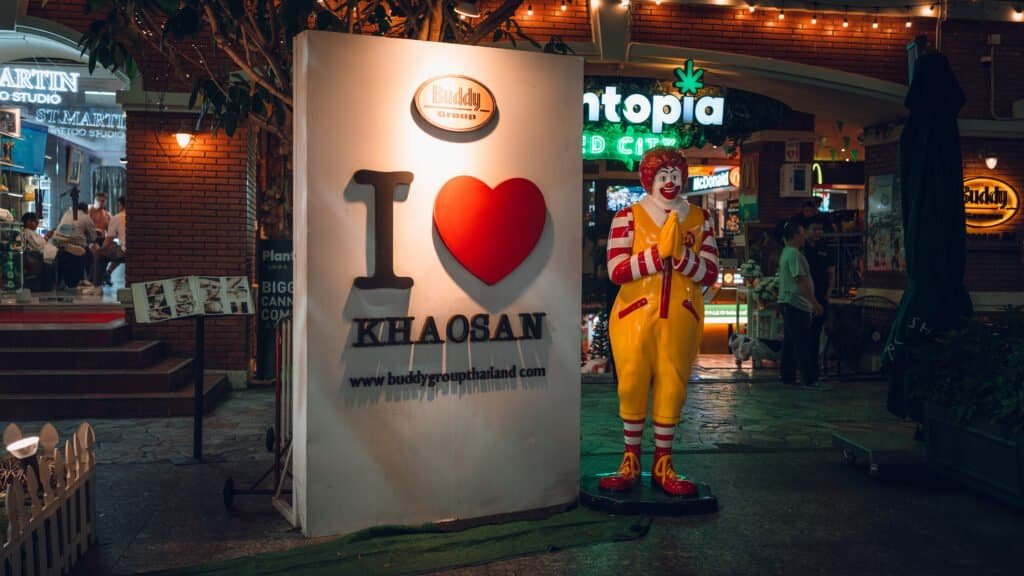
Old Town and Khao San (Rattanakosin and Banglamphu)
Old Town is the historic center of Bangkok and home to many of the city’s most important cultural sights. Khao San Road and nearby Rambuttri sit on the edge of this area, which is why many first-time visitors consider staying here. The area is lively and character-filled, but it does not offer the same convenience or transport access as other parts of the city.
Atmosphere
Old Town is busy and colorful during the day, with temple crowds, markets, and river traffic. Nights near Khao San are loud and social, with bars, music, and backpacker energy.
Rambuttri Road, one street back, is noticeably calmer. It has shade trees, relaxed cafes, and fewer late-night noise issues. Banglamphu’s surrounding streets feel more residential and local, with traditional shophouses and small temples.
Who Old Town or Khao San is best for
This area works well if you want:
- Walking access to Bangkok’s major temples
- A social, budget-friendly base
- Street food, markets, and nightlife nearby
- A historic setting with lots of character
If quiet evenings, smooth transport, or fast access across the city are priorities, other neighborhoods will feel easier.
Why stay in Old Town or Khao San
This is the closest you can stay to Bangkok’s most important cultural landmarks. You can walk to the Grand Palace and Wat Pho, take a short ferry to Wat Arun, and explore long-standing markets without daily transit planning.
The area is also more affordable than many other parts of the city, which appeals to budget travelers and backpackers. Khao San offers a built-in social scene, while Rambuttri and Banglamphu provide slightly calmer alternatives nearby.
What to know
Old Town does not have BTS or MRT access. You will rely on ferries, taxis, Grab, or walking, and travel times to other parts of Bangkok are longer, especially during peak hours or events near the palace.
Khao San Road itself is very loud at night. If sleep matters, staying on a nearby street like Rambuttri or in Banglamphu makes a big difference.
The area feels cultural and busy during the day, then shifts toward nightlife in the evenings. If you prefer calm nights or faster transport, Sukhumvit or the riverside may suit you better.
Transport
Ferries are the most practical way to move around from this area.
- Chao Phraya Express Boat
- Maha Rat Pier (near Wat Pho)
- Phra Arthit Pier (for Khao San and Rambuttri)
Taxis and Grab are easy to find, but traffic near the palace and main roads can be slow.
Old Town and Khao San at a glance
- Best for temples, history, and cultural sights
- Budget-friendly with a strong social scene
- Walkable during the day, lively at night
- No BTS or MRT access, longer travel times
- Works best if nightlife and culture matter more than convenience
If being close to Bangkok’s landmarks and nightlife is your priority, this area can work well. If ease and transport matter more, other neighborhoods will feel less demanding.
FAQ: Where to Stay in Bangkok
What is the best area to stay in Bangkok for first time visitors?
For most first-time visitors, Sukhumvit is the easiest choice. It has excellent BTS and MRT access, food everywhere, and simple routes across the city. Siam and Silom are also good options depending on your travel style.
What is the most convenient area to stay in Bangkok?
Sukhumvit is the most convenient area for getting around. You can walk to food, cafes, and train stations, and reach most parts of the city without relying on taxis. It works especially well for short trips.
Where should families stay in Bangkok?
Siam is a strong choice for families. It is central, walkable, and filled with malls and indoor attractions that help on hot or rainy days. Transport is simple and everything is close together.
What is the best area to stay in Bangkok for nightlife?
Silom works well if you want nightlife mixed with food and easy transport. It offers late-night options without feeling chaotic, and you can still get around the city easily the next day.
What is the best area to stay in Bangkok for food lovers?
Chinatown is the top choice for food-focused travelers. Street food, bakeries, and late-night eating are all right outside your door. Just keep in mind it is busier and less convenient for transport than other areas.
Where should I stay to be close to Bangkok’s temples and historic sites?
Old Town puts you closest to the Grand Palace, Wat Pho, and several major landmarks. Staying here saves time during sightseeing days, but transport to other parts of the city is slower.
Is it worth staying on Khao San Road?
Khao San Road works if you want nightlife and a built-in social scene. It is very loud at night and not connected to the BTS or MRT. Most travelers prefer a quieter nearby street or a different neighborhood entirely.
Is Sukhumvit a good area to stay in?
Yes. Sukhumvit is one of the best-connected parts of Bangkok and works well for first-time visitors. Areas like Asok, Phrom Phong, Thonglor, and Ekkamai offer different vibes while keeping transport simple.
Is Chinatown a good base for sightseeing?
Chinatown is excellent for food and atmosphere, but not the easiest base for transport. It works if you want character and nightlife, but many first-time visitors prefer staying closer to the BTS or MRT.
Where do most tourists stay in Bangkok?
Most tourists stay in Sukhumvit, Siam, or Silom. These areas are central, well connected, and easy to navigate, which makes them popular choices for first trips.
Should I stay near the airport?
Only if you have a very late arrival or early departure. Staying in the city gives you a better experience and easier access to food, attractions, and transport.
What area should first-time visitors avoid staying in?
First-time visitors should avoid staying far from the BTS or MRT. Long walks, traffic delays, and limited transport quickly add stress. Areas deep in residential neighborhoods or far west Thonburi are better for experienced visitors.
Is it better to stay near the BTS or MRT in Bangkok?
Yes. Staying near the BTS or MRT makes daily travel faster and more predictable. Trains avoid traffic and connect most major areas, which is especially helpful on a first trip.
Should I stay near the river or near the BTS?
Stay near the BTS if you want speed, flexibility, and easy access to food and shopping. The riverside suits travelers who prefer calm mornings and ferry travel, but daily movement is slower.
Is Bangkok walkable depending on where you stay?
Some areas are more walkable than others. Siam, parts of Sukhumvit, and Silom have better sidewalks and shorter distances. Old Town and Chinatown involve more heat, crowds, and uneven walking conditions.
Final thoughts on where to stay in Bangkok
Choosing the right area to stay in Bangkok shapes how easy and enjoyable your trip feels. Each neighborhood works well for a different type of traveler, from fast transport and flexibility in Sukhumvit to slower mornings along the river. Once you choose a base that matches how you like to travel, planning the rest of your days becomes much simpler.
I’ve stayed in every area on this list, and each one makes sense for a specific kind of first trip. Think about how you want your days to feel, pick the area that fits, and you’ll spend less time navigating and more time enjoying the city.
If you want help deciding what to avoid, how to get around, or what mistakes first-time visitors often make, you can explore my other Bangkok guides below.