How to Use the BTS and MRT in Bangkok: Simple Step-by-Step Guide

The first time I used the BTS in Bangkok, I stood at the top of the stairs and had to pause for a second, watching trains pull in while everyone else moved with purpose. Not because it was hard, but because there was a lot happening at once. Ticket machines. Turnstiles. People who clearly knew exactly where they were going. It felt like one of those moments where everything makes sense five minutes later, but not yet.
This guide explains how to use the BTS and MRT in Bangkok, step by step, for first-time visitors. There is no big-picture transport planning here, just the practical stuff you need once you are actually inside the station. If you are still figuring out how to get around Bangkok overall, start with my Getting Around Bangkok guide. If you already know you will be taking the train, this will help you feel comfortable before your first ride.
Once you are inside the system, the next question is usually which train to take. Bangkok runs on two main rail networks, the BTS Skytrain and the MRT subway. Understanding how they differ makes everything that follows much easier.
Best of Bangkok contains affiliate links and is a member of the Amazon Services LLC Associates Program. If you make a purchase using one of these Amazon links, I may receive compensation at no extra cost to you. See my Disclosure Policy for more information.
Quick summary: BTS & MRT in Bangkok
- BTS is elevated (above ground), MRT is mostly underground
- You buy tickets at the station right before you ride
- BTS and MRT do not share tickets (switching systems means re-entering)
- BTS: paper ticket for single rides, stored-value options if you ride a lot
- MRT: single-ride token that you keep until exit
Is the BTS or MRT better for your trip?
Bangkok’s trains are split into two systems: the BTS Skytrain (above ground) and the MRT subway (underground). They feel different on the first ride, but the basics are the same: follow the signs, buy a ticket at the station, and tap through the gates. The only thing that trips people up is that they are separate systems, so you handle tickets separately.
- BTS Skytrain: Elevated stations, best for areas like Sukhumvit, Siam, and Silom. Uses paper tickets or tap options depending on what you’re using.
- MRT subway: Underground stations, useful for places the BTS doesn’t cover as well (like Chinatown and parts of Old Town). Uses a plastic token for single rides.
If you’re still choosing a base, start with Where to Stay in Bangkok: Best Areas for First-Time Visitors.
How to use the BTS in Bangkok (step-by-step guide)
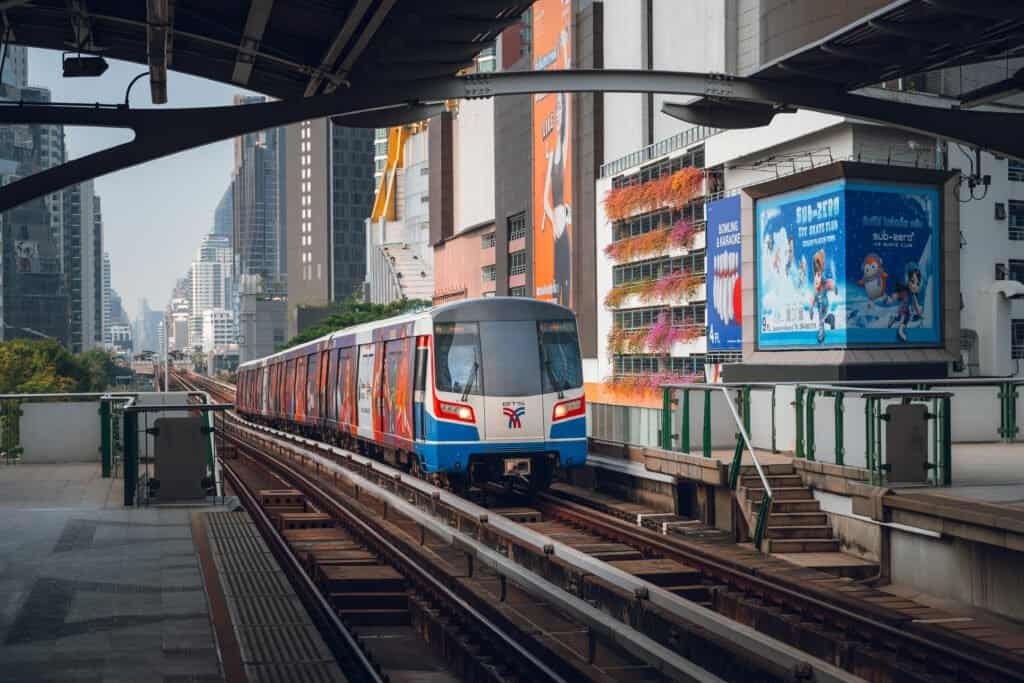
The BTS is usually the first train system people use in Bangkok, especially if they are staying along Sukhumvit or near Siam. It runs above ground, stations are easy to spot, and the overall flow is straightforward once you know where to go.
When you enter a BTS station, you will see ticket machines and staffed counters near the gates. The machines have English options and let you choose your destination by station name. After you pay, you receive a small paper ticket. If you are using a contactless bank card or a stored-value card, you can skip the machines and go straight to the gates.
To enter the system, tap your ticket or card on the reader at the gate. If you are using a paper ticket, keep it with you, because you will need it again when you exit. Staff are usually nearby if something does not work the first time.
Once inside, follow the signs to your platform. Trains run often, announcements are made in English, and station names are clearly marked. When you arrive at your stop, insert your paper ticket into the slot at the exit gate or tap out if you are using a card.
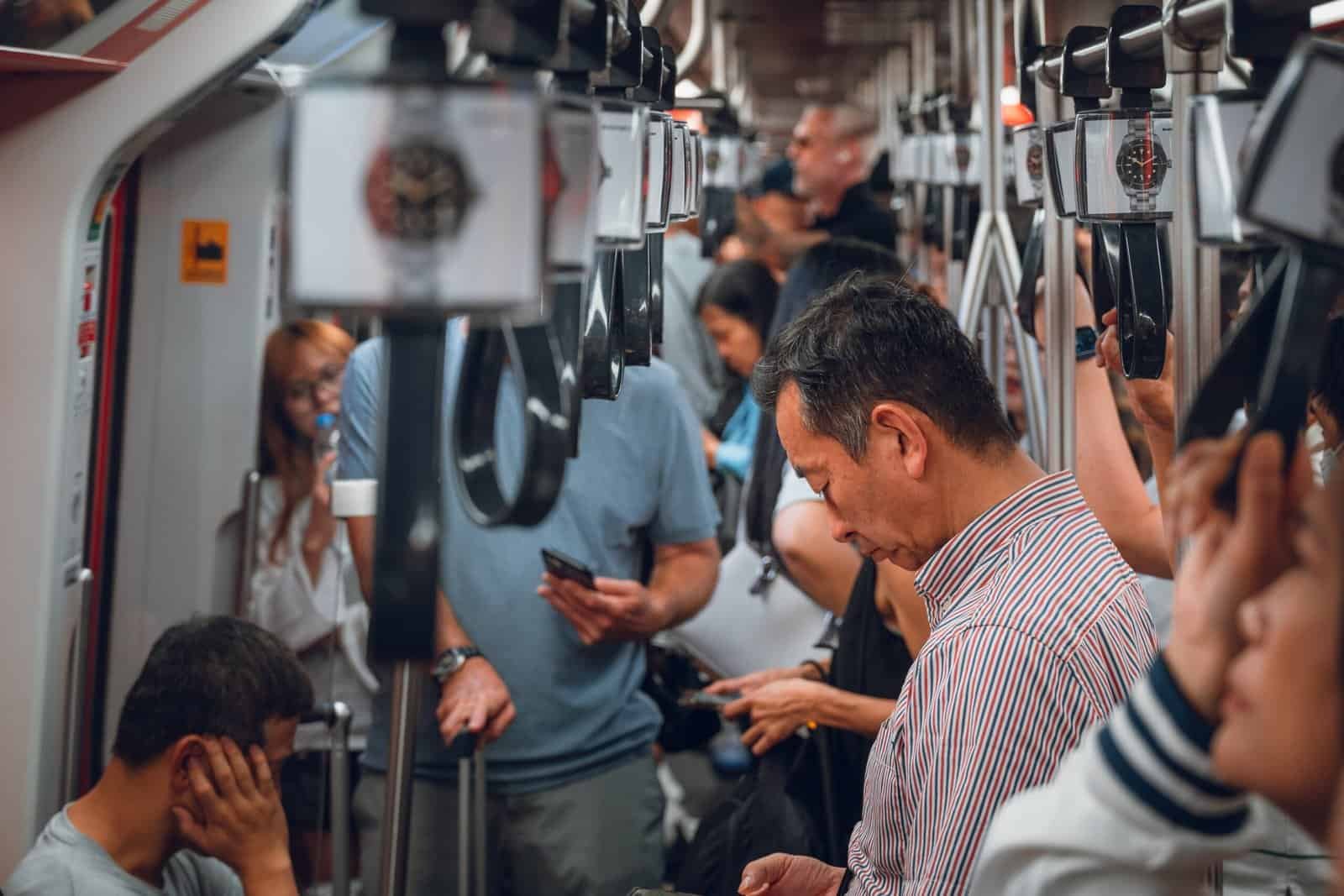
The BTS feels fast-paced during rush hour, especially in the mornings and late afternoons. Outside of those times, it is calm, air-conditioned, and one of the easiest ways to move around the city.
If the machine feels confusing, step aside and ask staff. They’ll point you to the right option.
TLDR: riding the BTS
- Enter the station and buy a ticket or tap in
- Follow signs to your platform
- Ride the train and listen for English announcements
- Insert your ticket or tap out to exit
How to use the MRT in Bangkok (step-by-step guide)
The MRT works a little differently than the BTS, but once you understand the flow, it is just as easy to use. Most of the confusion comes from the ticket system, not the trains themselves.
When you enter an MRT station, you will usually head straight toward the ticket machines or the ticket counter. The machines have English options and are easy to use. You choose your destination, pay, and receive a small plastic token instead of a paper ticket or card.
First-time MRT tip
Do not throw away your plastic token! You need it to exit the station.
To get through the gates, place the token on the reader at the entrance and keep it with you for the entire ride. This part matters. When you reach your destination, you will need to insert the token at the exit gate to leave the station. Many first-time riders tap the gate out of habit and then pause when it does not open.
If you’ve used the BTS once, the MRT will feel familiar. Platforms are clearly marked, signs are in English, and trains arrive frequently. The MRT is air-conditioned, well organized, and easy to navigate, even during busy hours.
One difference compared to the BTS is how tickets are handled. If you switch from the BTS to the MRT, you will need a new ticket or token. In practice, this usually adds only a minute or two and quickly becomes routine.
TLDR: riding the MRT
- Buy a ticket and take the plastic token
- Tap the token at the entrance gate
- Keep the token with you during the ride
- Insert the token at the exit gate
How to switch between the BTS and MRT
Quick transfer reality check
- You must exit one system before entering the other
- Tickets do not transfer between BTS and MRT
- Budget 5 extra minutes the first time
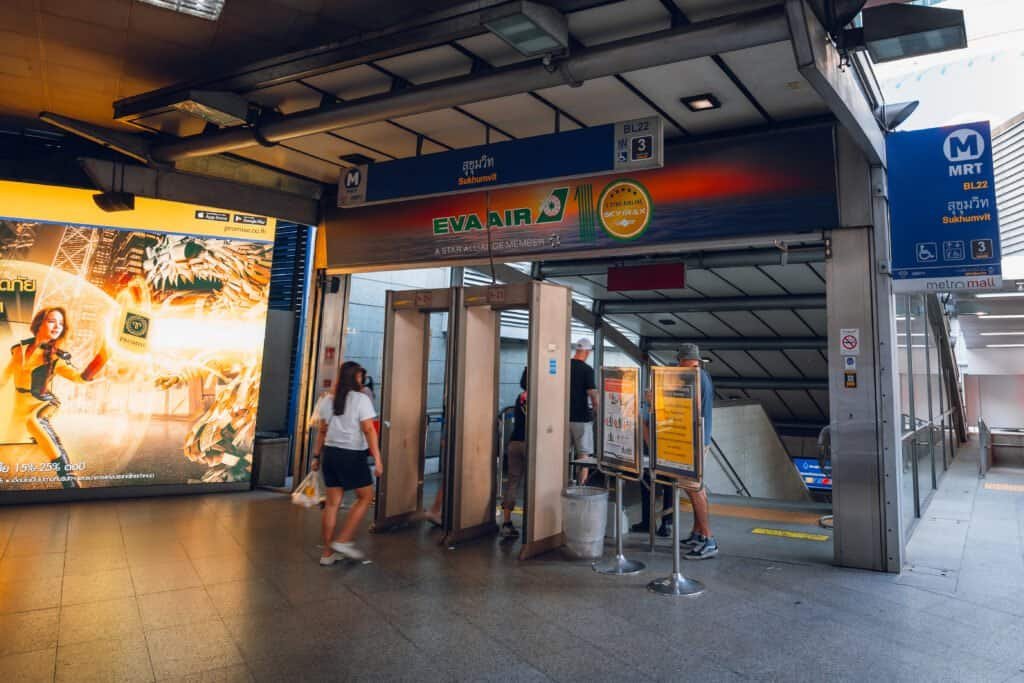
Switching between the BTS and MRT is one of the most confusing parts for first-time visitors, mostly because it feels like it should be simpler than it is. The key thing to know is that the BTS and MRT are two separate systems. Even when stations connect, tickets do not transfer.
The most common place people switch is around Sukhumvit, where Asok Station on the BTS connects to Sukhumvit Station on the MRT. The stations are linked by signs and walkways, but you still need to exit one system completely before entering the other. That means leaving through the gates, then buying a new ticket or using your card again.
This often catches people off guard the first time. You follow the signs, walk for a few minutes, and then realize you are back at ticket gates. That is normal. Nothing went wrong. It is just how Bangkok’s rail systems are set up.
You will see a similar setup around Siam, where multiple BTS lines intersect and make it easy to transfer within the BTS itself. The difference is that BTS-to-BTS transfers stay inside the system, while BTS-to-MRT transfers always require exiting and re-entering.
Once you expect this, switching becomes routine. Budget a few extra minutes, follow the signs, and do not throw away tickets until you are fully outside the gates. After a day or two, it stops feeling like a transfer and just becomes part of moving around the city.
How much the BTS and MRT cost
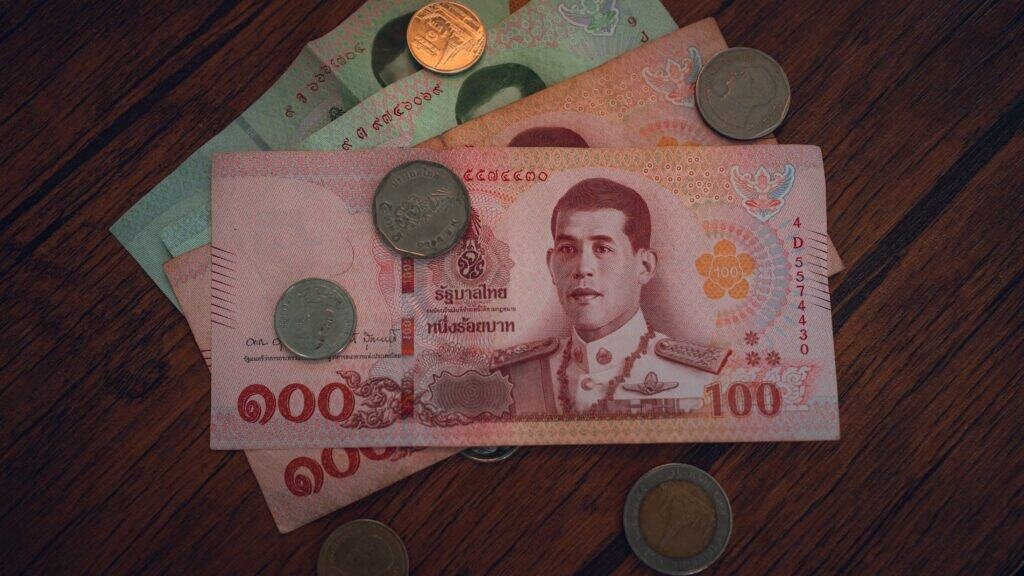
Both the BTS and MRT are priced by distance, so the farther you go, the more you pay. For most trips within central Bangkok, fares usually fall in a predictable range and are easy to budget for.
On the BTS, single-ride tickets typically cost somewhere between 40 and 60 baht for most common routes. Short hops are cheaper, and longer rides across multiple stations cost a bit more. If you are using a contactless card or stored-value card, the fare is calculated automatically when you tap in and out.
The MRT works the same way. You pay when you buy your token or tap in, and the system handles the rest.
For current hours, notices, and route maps, check the official BTS and MRT sites.
If you plan to use the trains often during your stay, stored-value or contactless cards can make things slightly faster. For short trips or occasional rides, buying single tickets works just fine.
Common mistakes first-time riders make
Everyone does one of these at least once.
- Standing in the wrong queue at the machines
- Forgetting to keep the MRT token until exit
- Stopping in front of the doors when people are exiting
- Standing on the left side of the escalator
- Getting surprised by rush hour crowds
Practical tips to make your first ride easier
Best times to ride
- Mid-morning and early afternoon are easiest
- Rush hour is fine, just crowded
Comfort + etiquette
- Trains can feel cold, bring a light layer
- Stand right, walk left on escalators
- If you have luggage, avoid peak times
Most importantly, give yourself permission to move a little slower on the first ride. Pause to read signs. Step aside if you need a second. Station staff are used to helping visitors and are usually happy to point you in the right direction. After one or two trips, the BTS and MRT stop feeling like systems you need to figure out and start feeling like part of the city.
Frequently Asked Questions about using the BTS and MRT
Do I need to buy tickets in advance for the BTS or MRT?
No. Tickets are bought at the station right before you ride. There is no advantage to booking ahead, and most people decide where they are going as they go.
Can I use the same ticket for both the BTS and MRT?
No. The BTS and MRT are separate systems. Even when stations connect, tickets do not transfer. You will need to exit one system and buy a new ticket or token to enter the other.
Is it easy to use the BTS and MRT without speaking Thai?
Yes. Signs, ticket machines, and announcements are in English. You do not need to speak Thai to use either system.
What happens if I get on the wrong train or miss my stop?
It is not a big deal. Just get off at the next station and head back in the opposite direction. Trains run frequently, so small mistakes are easy to fix.
Are the BTS and MRT safe at night?
Yes. Stations are well-lit, staffed, and busy well into the evening. Like anywhere, stay aware of your surroundings, but the systems are generally very safe.
Can I bring luggage on the BTS or MRT?
Yes, but space is limited during busy times. Smaller bags are easier to manage. If you have large luggage, try to ride outside peak hours.
Can I pay with a contactless card on the MRT?
Not always. Contactless payment options vary by line and station. If tap doesn’t work, just buy a token from the machine. It takes under a minute.
Which app should I use for BTS and MRT directions?
Google Maps works well for routing and platform directions. This is easier if you have data.
Final thoughts on using the BTS and MRT in Bangkok
The BTS and MRT can feel overwhelming the first time you step into a station, but that feeling fades quickly. Once you have taken one or two rides, the signs make more sense, the ticket process feels routine, and moving around the city starts to feel simple instead of stressful.
You do not need to memorize routes or understand everything upfront. Give yourself a few extra minutes, follow the flow of the station, and trust that small mistakes are easy to fix. Bangkok’s train systems are built to move a lot of people every day, and they are more forgiving than they look at first glance.
If you want to see what this looks like in real time, I walk through the full process in the YouTube video that goes with this guide. Watching someone else do it once can make that first ride feel much easier. And if you are already comfortable with the trains, you can start using them to explore neighborhoods like Sukhumvit, Siam, and beyond with confidence.