Chao Phraya Express Boat: How It Works, Routes, and What to Know First

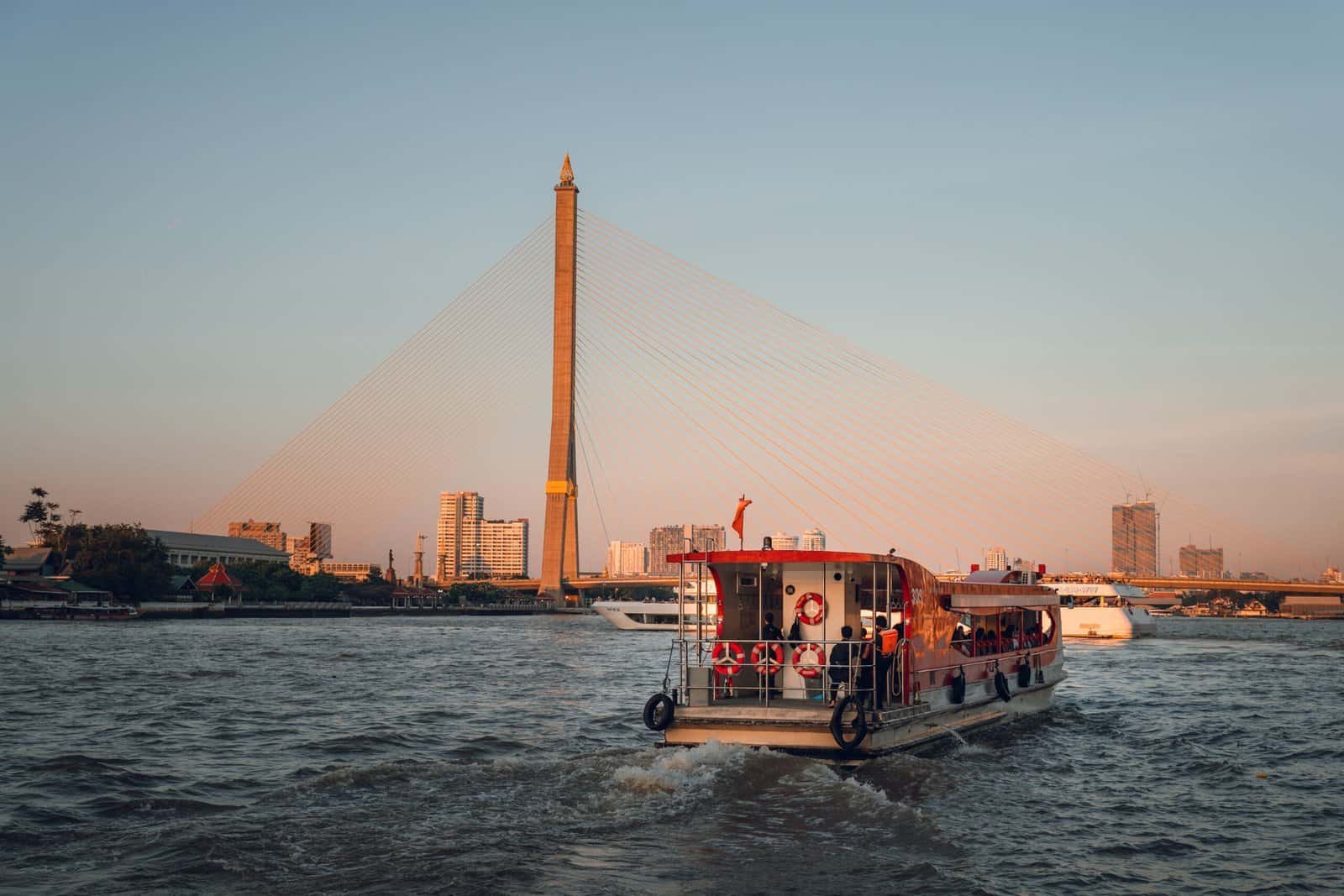
The Chao Phraya Express Boat is one of the most practical ways to travel along Bangkok’s river, but it is also one of the most confusing for first-time visitors. Different flag colors, multiple piers, and unclear ticket rules can make it feel harder than it actually is.
This guide focuses only on how the Chao Phraya Express Boat works. It explains where it runs, how much it costs, how to pay, and what to expect once you board. It is not a sightseeing cruise, and it is not meant for crossing the city. It is a public boat system that works well in specific situations.
If you are still deciding which type of transport makes sense for your trip overall, start with Getting Around Bangkok. This guide picks up from there and shows you exactly how to use the Chao Phraya Express Boat without stress.
What the Chao Phraya Express Boat Is (And What It Isn’t)
The Chao Phraya Express Boat is a public river transport system that runs along the Chao Phraya River. Locals use it to commute. Visitors use it to reach riverside sights without sitting in traffic. It functions more like a city bus on water than a tour or cruise.
What it is not matters just as much. It is not a guided experience, and it is not designed for slow sightseeing. Boats stop briefly, routes are fixed, and you are expected to know where you are getting off. If you board expecting a relaxed river cruise, it can feel rushed and confusing.
Once you understand that it is simple, practical transport, the system makes a lot more sense. Treat it like a moving pier-to-pier connection, not an attraction on its own.
The Chao Phraya Express Boat is officially operated as part of Bangkok’s public river transport system and has been running since the early 1970s, carrying commuters and visitors along the river every day.

Where the Chao Phraya Express Boat Runs
The Chao Phraya Express Boat runs north to south along the Chao Phraya River, connecting central Bangkok with riverside neighborhoods and extending north into Nonthaburi. Boats stop at a series of numbered piers rather than named stations, which can be unfamiliar at first.
Most first-time visitors will use the central section of the route. This includes piers near major temples, ferry crossings, and connections to other transport hubs. Sathorn Pier is the most common starting point because it is easy to reach and clearly signed.
Boats heading north and south use separate sides of the pier. Direction signs are posted, but it is worth double-checking before boarding so you do not end up going the opposite way.
You do not need to memorize the entire route. In practice, most trips involve boarding at one central pier, riding a short distance, and getting off near a specific landmark. Knowing your destination pier ahead of time is enough.
Types of Boats and Flag Colors Explained
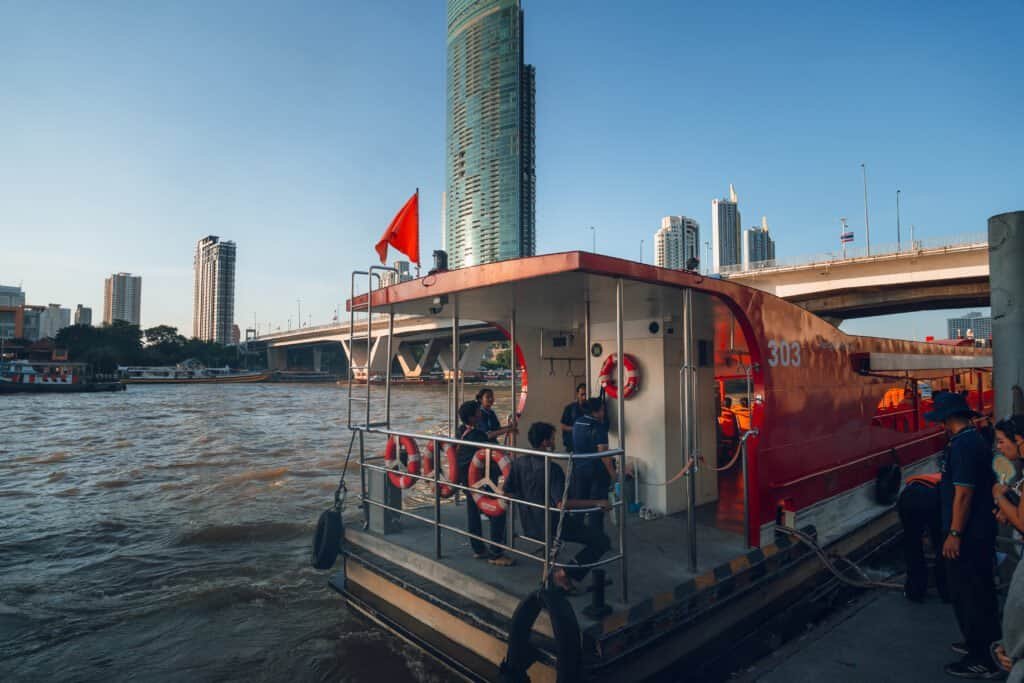
One of the most confusing parts of the system is that different boats use different flag colors. These flags indicate route patterns and stopping behavior, not comfort level or ticket type.
The orange flag boat is the one most visitors use. It runs frequently, stops at the main piers, and is straightforward for short trips along the river. If you are unsure which boat to take, this is usually the correct choice.
In addition to standard express boats, some routes also use newer air-conditioned catamaran boats. These operate on specific lines and are designed to connect more directly with major transport hubs along the river.
Other flag colors exist, including yellow and green, but they operate on more limited schedules or skip certain stops. You do not need to understand these in detail for a typical visit.
You may also see signs for tourist boats. These are separate services with different pricing and boarding rules. They are not part of the express boat system and should be treated as a different product entirely.
How Much the Chao Phraya Express Boat Costs
The Chao Phraya Express Boat uses a simple, low-cost fare system. Most rides cost the same regardless of how far you travel, especially on the orange flag boats that visitors typically use.
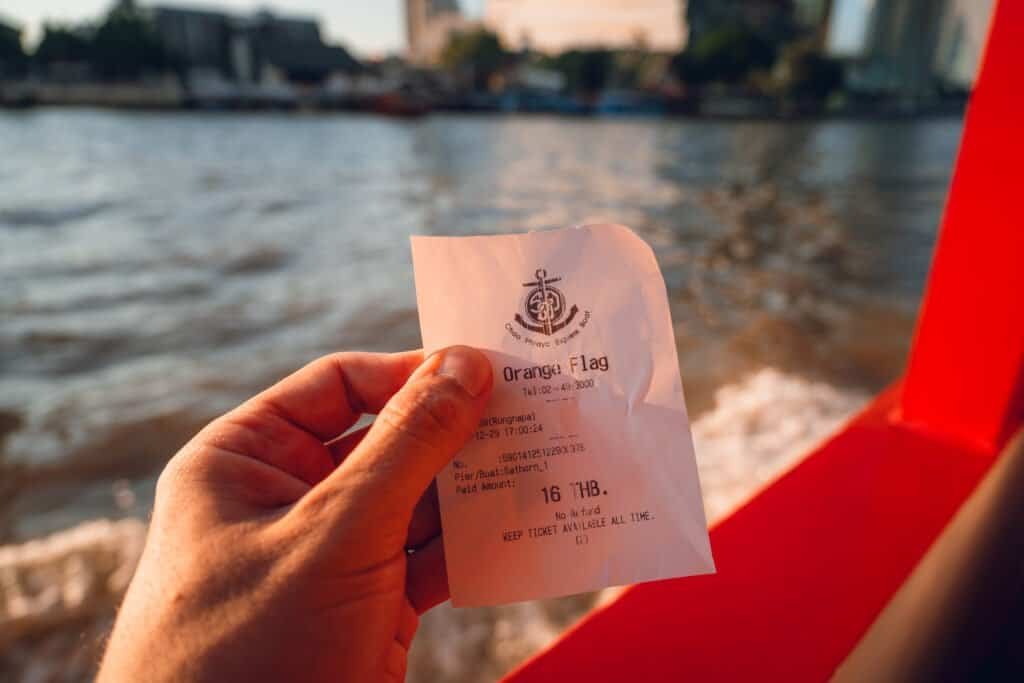
As a reference point, the orange flag boat typically runs the full route for a low flat fare, while other lines may charge slightly more depending on the service. Prices are posted at piers and collected onboard, so you do not need to calculate anything in advance.
Prices can change slightly over time, but fares are generally inexpensive and paid per ride. You do not need to calculate distance, zones, or time. A short ride and a longer ride usually cost the same.
There are no passes or advance tickets required. For most travelers, this means you can decide to take the boat on the spot without planning ahead.
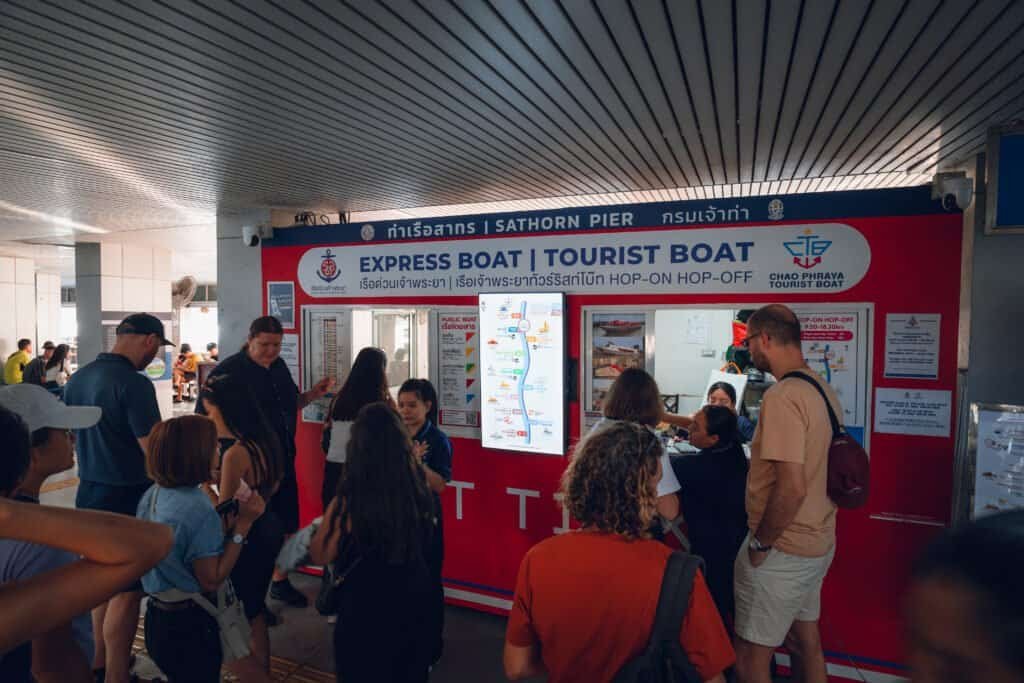
How to Pay and Buy Tickets
Payment is straightforward but works a little differently than trains or taxis. In most cases, you pay after boarding, not before.
Once the boat departs, a staff member walks through the boat to collect fares. You pay in cash, receive a small paper ticket, and keep it until the end of your ride.
Cash is expected. Small bills are best, and exact change helps things move faster. Credit cards, apps, and QR payments are generally not accepted onboard.
At some larger piers, you may see ticket counters or staff before boarding, but this is not required for most trips. Boarding first and paying onboard is normal.
If you are unsure what to do, waiting until you are onboard and following what others do is usually the easiest approach.
How to Ride the Chao Phraya Express Boat Step by Step
Before boarding
Start by finding the correct pier for your direction of travel. Piers have signs showing whether boats are heading north or south. If you are unsure, staff or nearby locals can usually help.
Onboard
Wait at the edge of the pier until the boat approaches. Boats stop briefly, so be ready. When boarding begins, step on calmly and move inside rather than stopping at the entrance. Standing is normal, especially during busy times.
Once the boat is moving, a staff member collects fares. Pay in cash, take your ticket, and watch the pier numbers as you go. Announcements are limited, so knowing your exit pier in advance matters.
Getting off
When your pier approaches, move toward the exit early. Boats do not wait long. Step off, follow the pier ramp up, and you are done.
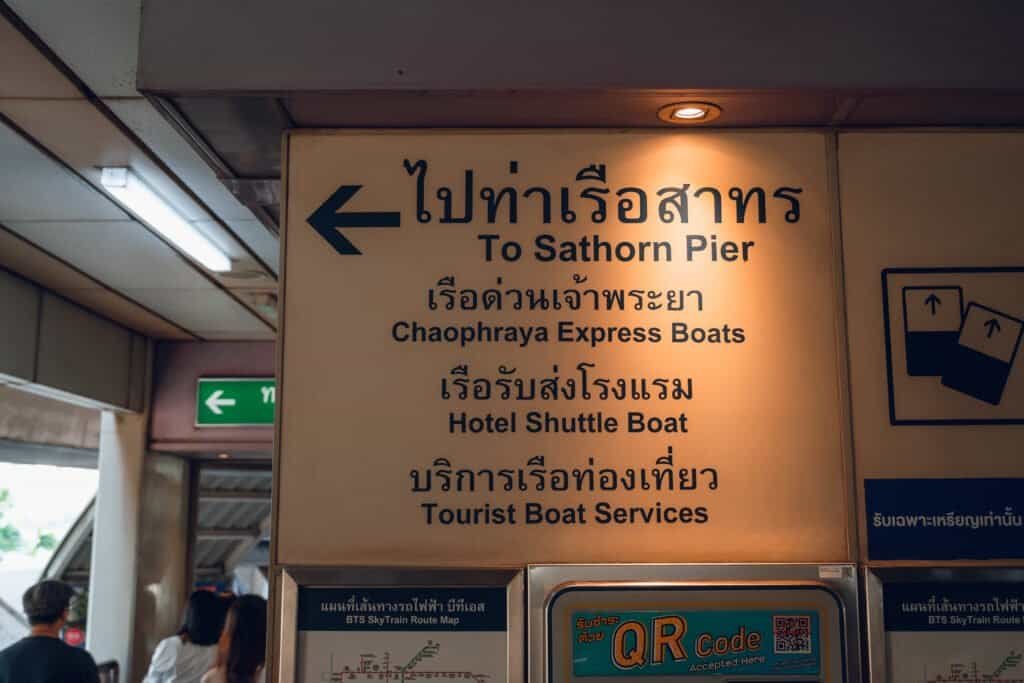
Best Piers for First-Time Visitors
Some piers are easier to use than others, especially if it is your first time on the river.
Sathorn Pier is the most beginner-friendly starting point. It is well signed, busy, and has staff nearby. Many routes pass through here, which makes it forgiving if you are unsure which boat to take.
Tha Chang Pier is popular for temple visits and easy to recognize once you are on the river. It is busy but straightforward.
If you are staying near the river, boarding at a nearby pier can save time and avoid traffic. Just make sure the pier serves express boats and not only private ferries.
Common Mistakes First-Time Riders Make
The most common mistake is boarding the wrong boat without checking the flag color. If you are unsure, wait for an orange flag boat rather than guessing.
Another mistake is overthinking tickets. You do not need to buy anything in advance, and you do not need to queue unless staff direct you to do so.
Some riders also wait too long to move toward the exit. Boats stop briefly, and missing your pier means riding farther than planned and backtracking.
Finally, many people assume the boat works like a tour. It does not. Treat it like public transport and stay alert.
When the Chao Phraya Express Boat Makes Sense (And When It Doesn’t)
The express boat works best when your destination is along the river or close to a pier. It is useful for visiting riverside temples, avoiding heavy traffic, or enjoying a cooler ride during the day.
It is less useful for crossing the city or reaching places far from the river. Later in the evening, service becomes more limited.
Think of the boat as a situational tool. When it fits your route, it is efficient and enjoyable. When it does not, forcing it can slow you down.
Quick Tips to Make Your First Ride Easier
Ride earlier in the day if you can. Boats are less crowded and easier to navigate.
Double-check the direction of travel before boarding. Northbound and southbound piers are clearly marked.
Have small bills ready so paying onboard is quick.
If you miss your stop, stay calm. Get off at the next pier and adjust from there.
Frequently Asked Questions
Is the Chao Phraya Express Boat safe for tourists?
Yes. It is a public transport system used daily by locals and visitors. Boats are staffed, regulated, and generally very safe when you pay attention while boarding and exiting.
How much does the Chao Phraya Express Boat cost?
Most rides use a low flat fare, especially on orange flag boats. You pay per ride, not by distance.
How do you pay for the Chao Phraya Express Boat?
You usually pay onboard after boarding. Cash is collected by staff, and you receive a paper ticket.
Do tourists need to buy tickets in advance?
No. You do not need to book ahead. Most people board first and pay onboard.
How often do the boats run?
Boats run frequently during the day, often every few minutes on the main routes. Service becomes less frequent later in the afternoon and evening.
Which boat should first-time visitors take?
The orange flag boat is the easiest and most common option for visitors.
Is the Chao Phraya Express Boat the same as a tourist boat?
No. Tourist boats are separate services with different pricing and rules.
Can you bring bags or backpacks on the boat?
Yes. Small bags and backpacks are normal. Large luggage is not ideal during busy times.
What happens if you miss your stop?
You stay on the boat, get off at the next pier, and adjust from there.