Is Bangkok Safe for Tourists? Practical Safety Tips for First-Time Visitors

Bangkok can look chaotic from the outside. Traffic, crowds, heat, and headlines often make first-time visitors wonder if they are missing something important. In reality, the city functions like other large global cities, and millions of travelers move through it every day without issue.
This guide focuses on practical, real-world safety in Bangkok. It covers the situations that actually come up, how to avoid common scams, and when simple choices make the biggest difference.
Is Bangkok Actually Safe for Tourists?
Yes. Bangkok is generally safe for tourists. Violent crime against visitors is rare, and most trips are uneventful. The issues travelers encounter are usually minor and predictable, such as petty theft, traffic risks, or common scams in busy areas, not personal safety threats.
For first-time visitors, Bangkok can feel intense because it is crowded, loud, and unfamiliar. That intensity is often mistaken for danger. In practice, safety in Bangkok comes down to situational awareness, knowing how to move around the city, and understanding a few local patterns. If you’re still figuring out transport, start with my Getting Around Bangkok guide
Most travelers feel safest in central areas with good transport, busy streets, and clear routes back to their accommodation. Choosing the right neighborhood and transport options reduces stress and removes many safety concerns before they even come up.
So before getting into specific tips and situations, it helps to answer the most common question travelers ask first.
Quick Safety Overview for Bangkok Travelers
- Bangkok is generally safe for tourists. Most problems are scams, petty theft, or traffic.
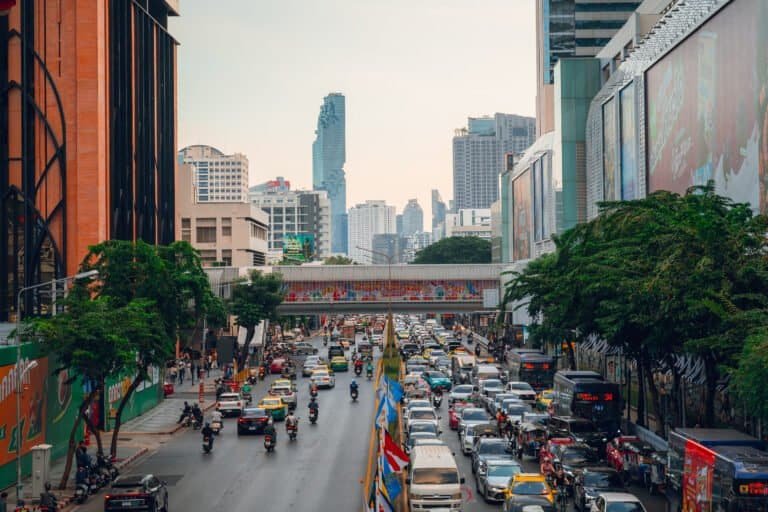
- The biggest risk is traffic, not crime.
- Ignore unsolicited “help” near major sights (especially temples).
- Use BTS/MRT or Grab when you want predictable, low-stress transport.
- At night, stick to busy streets. If it gets quiet, switch to Grab.
- Choose a base near a station so you’re not making tired decisions late.
What First-Time Visitors Worry About Most (And What Actually Matters)
Most first-time visitors are not worried about serious crime. They worry about making a mistake. Getting scammed, getting lost, taking the wrong taxi, or ending up somewhere they did not mean to be. Those concerns are understandable, especially in a city as large and fast-moving as Bangkok.
What helps is understanding that most safety issues in Bangkok are situational, not random. Problems tend to show up in predictable moments, like crowded tourist areas, late-night travel when you are tired, or situations where someone pressures you to decide quickly. Once you stop rushing and stick to straightforward plans, most problems fade.
Another common fear is simply feeling overwhelmed. Bangkok is busy, loud, and visually intense, which can make everything feel higher risk than it actually is. In practice, staying near good transport and using simple options like trains and Grab removes much of that stress. You do not need to master the city. You just need a few reliable defaults.
If something feels confusing or off, you are allowed to pause. Step into a café, check your phone, or switch transport options. Bangkok often feels easier when you give yourself time and listen to that small internal “pause” when something does not feel right.
The most common source of stress for first-time visitors is not crime, but confusion, especially around scams.
Common Scams in Bangkok (And How to Avoid Them)
Most scams in Bangkok are predictable. Someone approaches you without being asked, offers help or a deal, and tries to steer you away from your original plan. Once you know that pattern, these situations become much easier to spot and avoid. If you want a full breakdown of mistakes to avoid, my What Not to Do in Bangkok guide covers them in more detail.
The “Temple Is Closed” Scam
This usually happens near major temples. Someone tells you the site is closed for a holiday or ceremony and suggests an alternative plan, often involving a tuk-tuk ride and shop stops.
How to avoid it
- Assume temples are open unless signage says otherwise
- Walk directly to the entrance and check for yourself
- Politely ignore anyone who approaches you outside
If someone is standing outside offering help before you ask for it, you can safely ignore them and keep walking.
Tuk-Tuk Detours and Shop Stops
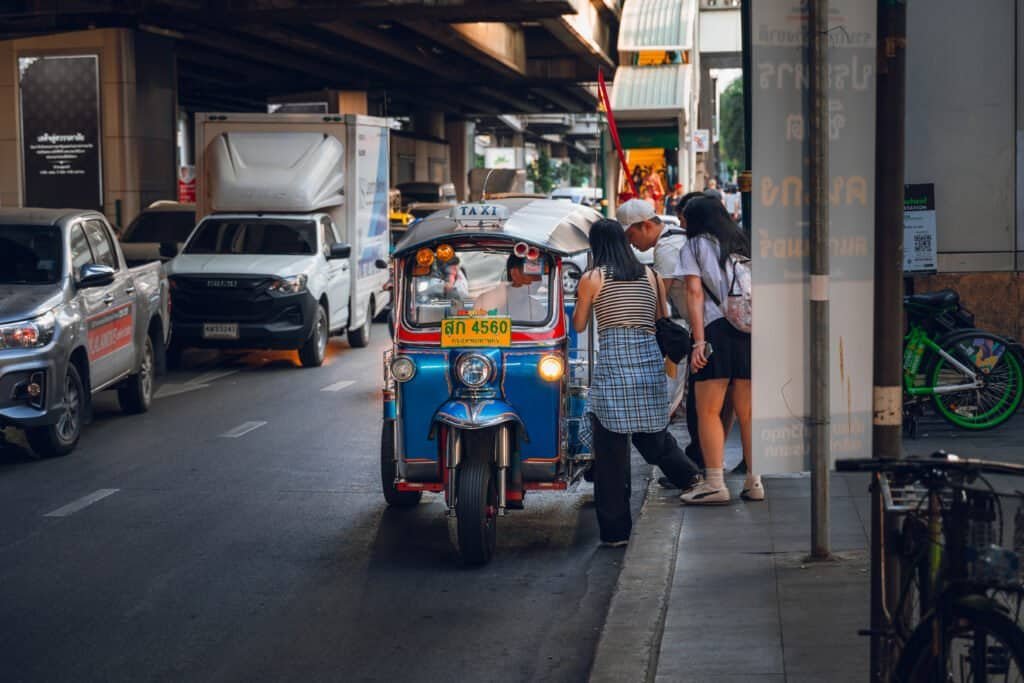
Some tuk-tuk drivers offer very cheap rides, then detour to tailor shops, gem stores, or souvenir stops. It’s not technically a scam, but it is something to be aware of.
How to avoid it
- Agree on the destination clearly before getting in
- Say no to any added stops
- Walk away if the offer feels rushed or complicated
For reliable transport, trains or Grab are usually easier.
I fell for this scam on my very first day in Bangkok. I documented what it looked like in practice in this video. It was my very first YouTube upload, so the quality isn’t great, but it shows what this scam can look like.

Overpriced or Unmetered Taxis
In tourist-heavy areas, some taxis refuse to use the meter or quote inflated flat rates.
How to avoid it
- Always ask for the meter before getting into the car
- Step away if the driver refuses
- Use Grab when you want predictable pricing
This is frustrating, but it’s rarely a safety issue.
Motorbike and Rental Damage Claims
This involves being charged for damage you did not cause, most often when renting scooters or equipment from informal vendors.
How to avoid it
- Avoid renting vehicles or equipment from informal street vendors
- Take photos before renting anything
- Stick to reputable operators recommended by hotels
Pickpocketing in Crowded Areas
Pickpocketing is uncommon but can happen in packed markets, festivals, or transit during rush hour.
How to avoid it
- Keep bags zipped and worn in front in crowds
- Avoid using your phone absentmindedly in busy areas
- Be extra aware on packed trains or in night markets
This is standard big-city awareness and not unique to Bangkok.
If a situation feels rushed, pushy, or requires you to change your plan on the spot, it’s okay to walk away. Scams rely on pressure. Removing yourself usually ends the situation immediately.
Bangkok Scam Red Flags to Remember
If a situation includes one or more of these, pause and reassess.
- Someone approaches you unsolicited with help or advice
- You are told a major sight is closed without official signage
- There is pressure to decide quickly or change your plan
- A deal sounds unusually cheap or “special today only”
- A driver insists on extra stops you did not agree to
- You are asked to leave a busy area for somewhere unfamiliar
What to do
- Say no politely and keep walking
- Step into a shop, café, or busy area
- Switch to a train or Grab
- Trust that walking away is always acceptable
Night safety is another question that comes up often, especially around when it makes sense to walk and when it’s better to ride.
Is It Safe to Walk Around Bangkok at Night?
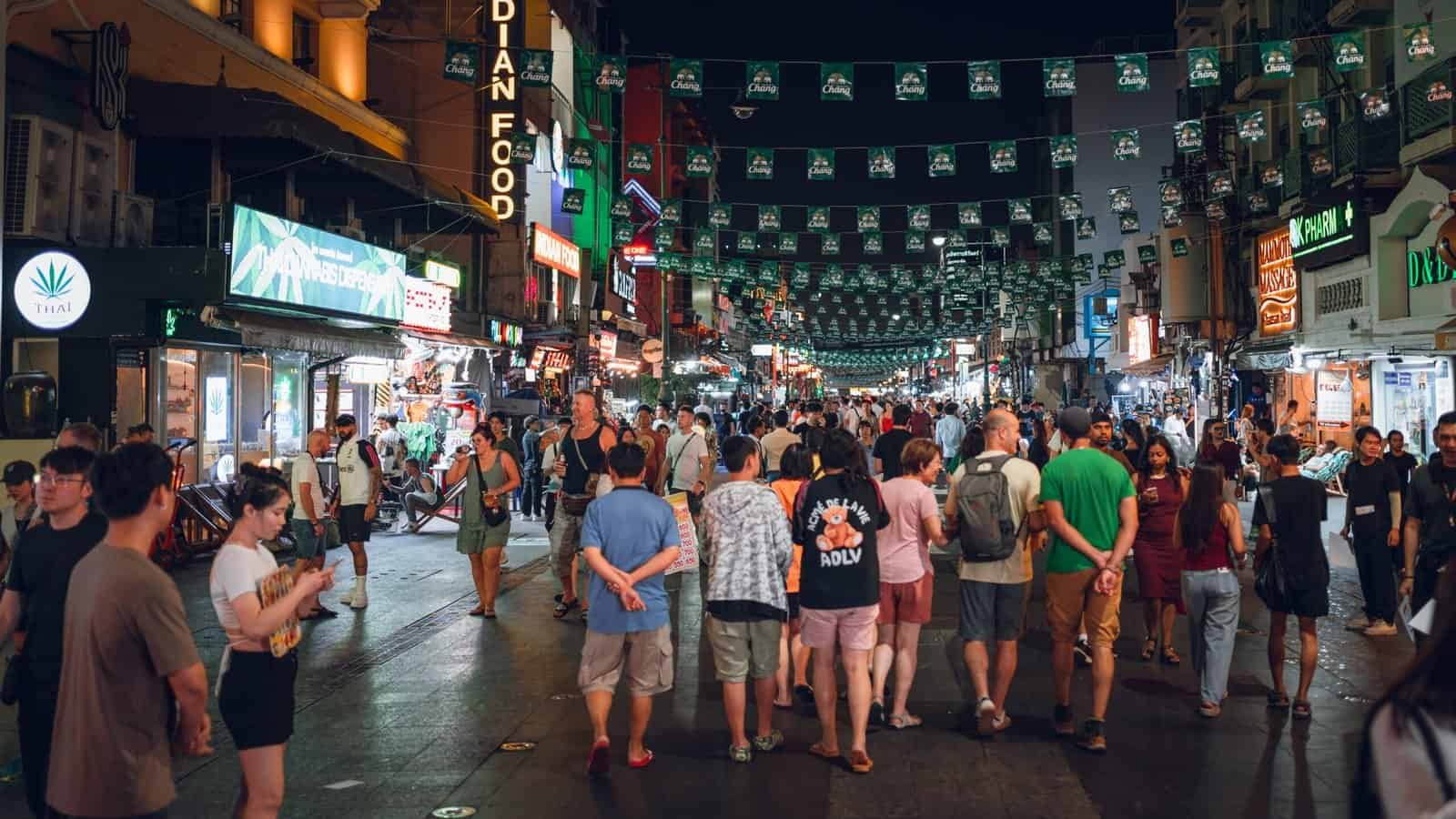
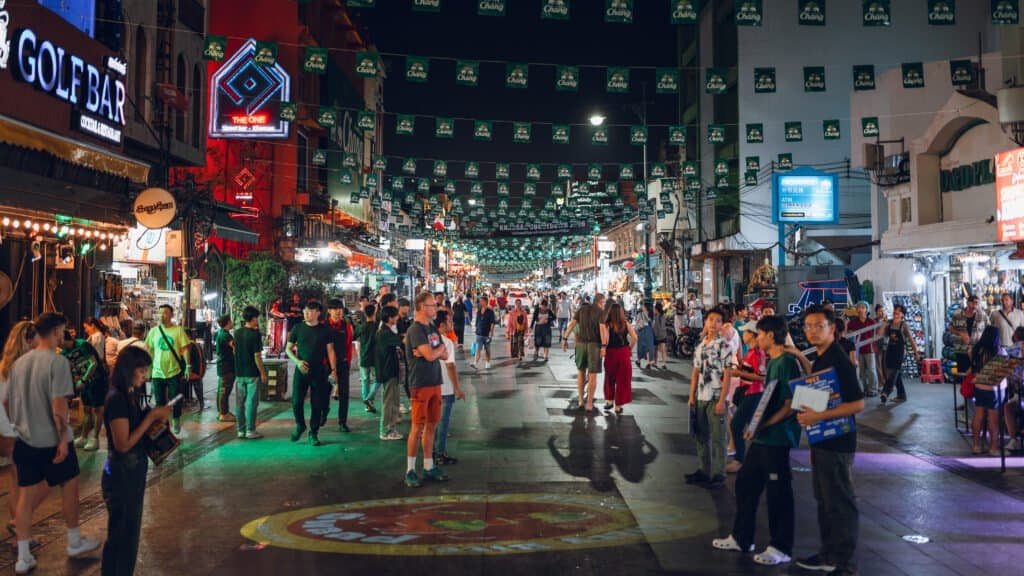
Yes. It is generally safe to walk around Bangkok at night, especially in busy, well-lit areas. Many neighborhoods stay active late, with restaurants, night markets, convenience stores, and street food keeping streets lively well into the evening.
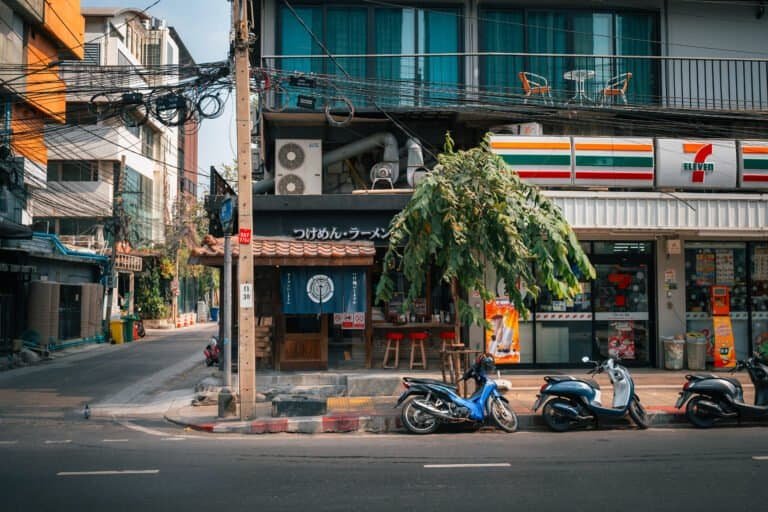
Most visitors feel comfortable walking at night in central areas with good lighting and steady foot traffic, such as Sukhumvit, Siam, and parts of Silom. These areas are familiar with tourists, have clear routes, and make it easy to step into a shop or café if you need a break or directions.
Caution matters most once streets quiet down. Side streets that empty out, poorly lit areas, or long walks late at night can feel uncomfortable, not because they are dangerous, but because transport and help are less convenient. When you are tired, unsure of your route, or far from where you are staying, switching to Grab is usually the simplest option.
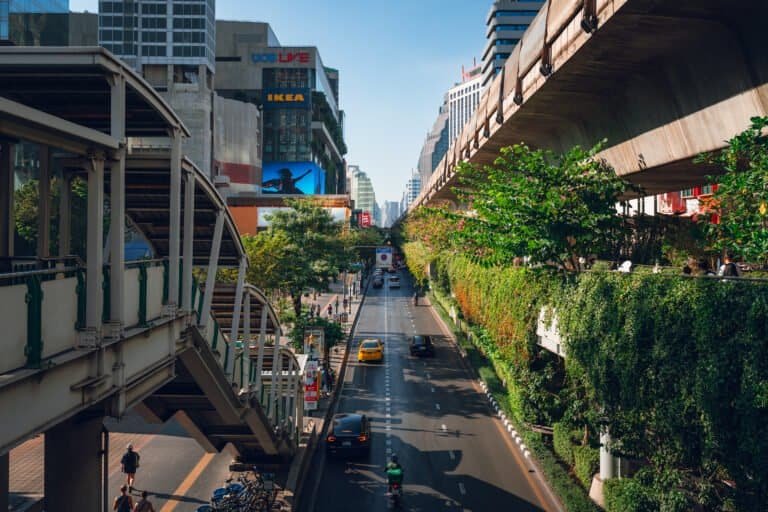
The biggest night-time risk in Bangkok is not crime, but traffic. Crossing busy roads requires patience and attention, especially after dark. Use pedestrian bridges when they are available and take your time.
Safest Ways to Get Around Bangkok After Dark
Getting around Bangkok at night is easiest when you keep your transport choices simple.
Best choices
- BTS and MRT until closing time in busy areas
- Grab for late nights, longer distances, or when you feel tired
- Walking short distances on well-lit, active streets
When to switch transport
- Streets become quiet or poorly lit
- You are far from your accommodation
- You are unsure of the route
- You have been out late and want a direct ride back
What to skip
- Long walks late at night through unfamiliar areas
- Negotiating taxis when you are tired
- Tuk-tuks for late-night transport if pricing feels unclear
Choosing convenience over saving a few minutes or baht usually makes night travel smoother and more comfortable.
Many night safety questions come down to one thing: how you get from place to place.

Transportation Safety in Bangkok
Transportation plays a bigger role in safety than most people expect. In Bangkok, feeling unsafe is far more likely to come from confusing transport choices than from crime itself.
Trains are the most predictable option. The BTS Skytrain and MRT Subway are clean, well lit, and used by locals and visitors throughout the day and evening. Stations are staffed, signage is clear, and routes are easy to follow once you understand the basics.
When trains are not convenient, Grab is the easiest fallback. You see the route and price upfront, rides are logged in the app, and there is no negotiation involved. This makes it especially useful at night, when you are tired, or when you just want a direct ride back.
Regular taxis are everywhere, but consistency varies. Some drivers refuse the meter or quote flat rates in tourist areas. This is frustrating rather than unsafe, which is why many visitors prefer Grab. If a taxi refuses the meter, stepping out and finding another one is normal.
Tuk-tuks are part of the Bangkok experience, not a safety concern, but they work best for short daytime rides when the price is agreed on clearly. Late at night or for longer distances, they tend to add more hassle than benefit.
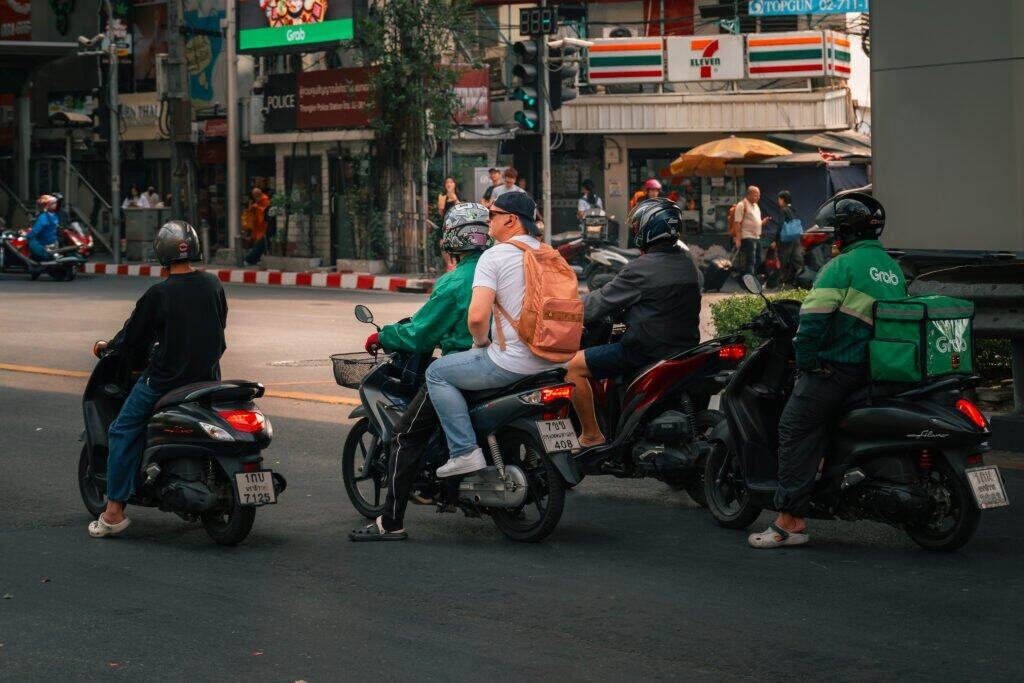
One thing that surprises many visitors is that traffic is the biggest real risk. Cars do not always stop at crossings, and motorcycles can come from unexpected directions. Use pedestrian bridges when they are available and take your time.
Where you stay also matters. Being close to a BTS or MRT station makes daily transport decisions feel simpler and less tiring.

Neighborhood Safety: What Areas Feel Easiest for First-Time Visitors
In Bangkok, safety is closely tied to where you base yourself. Not because some neighborhoods are dangerous, but because certain areas make daily movement simpler, more predictable, and less tiring.
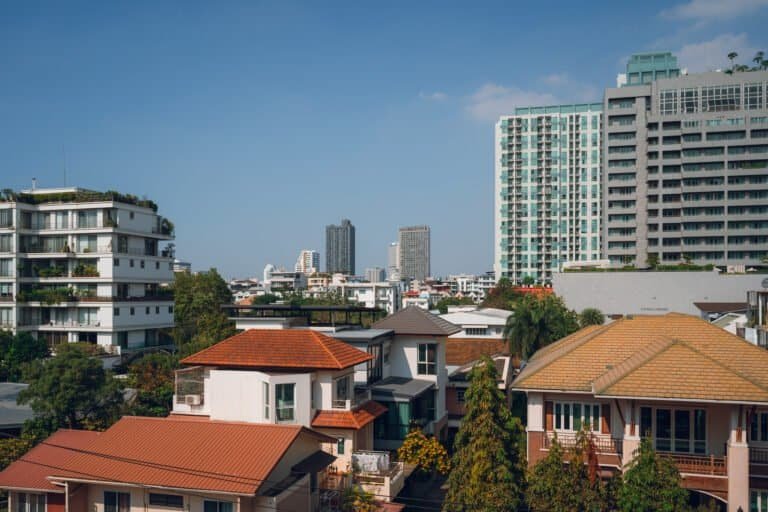
For first-time visitors, neighborhoods with strong transport access tend to feel the most comfortable. Areas like Sukhumvit, Siam, and Silom stay busy throughout the day and evening, are well lit, and are connected by BTS or MRT lines. It’s easy to find food, get back to your accommodation, or switch to Grab if plans change.
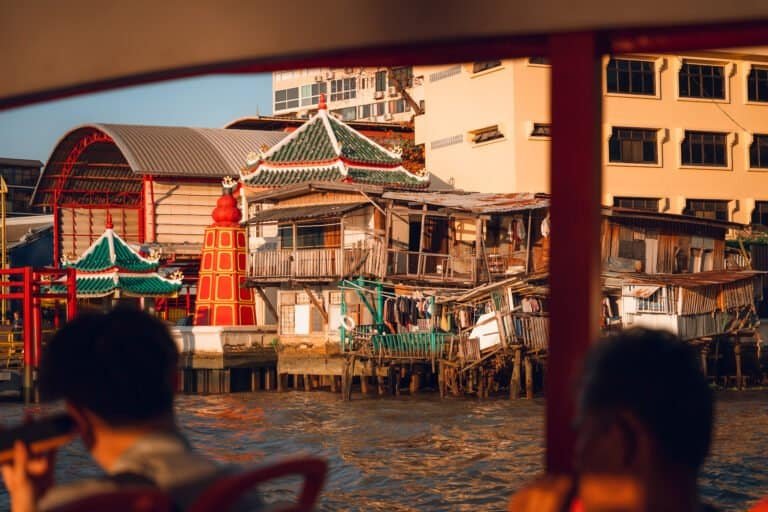
Areas like Chinatown and Old Town are also generally safe, but they can feel more intense. Sidewalks are narrower, traffic is heavier, and transport requires more planning. Many travelers enjoy staying there, especially for food or temples, but these areas ask for a bit more patience and awareness, particularly at night.
What matters most is not choosing a “safe” neighborhood, but choosing one that fits how you like to move through a city. If you value flexibility and clear routes, staying near a BTS or MRT station makes a noticeable difference. If you enjoy slower mornings and don’t mind relying on boats or taxis, riverside areas can still feel calm and comfortable.
For a deeper breakdown of which neighborhoods work best for different travel styles, our Where to Stay in Bangkok guide walks through each area and explains what daily life actually feels like.
Once your base and transport are sorted, personal safety becomes much simpler.
Personal Safety Tips That Actually Matter in Bangkok
Most safety advice turns into background noise because it’s too broad. In Bangkok, a handful of small habits make more difference than long lists of rules.
Keep bags zipped and worn close to your body in crowded places. In night markets, on packed trains, or during festivals, wearing backpacks on your front and keeping phones out of loose pockets helps avoid problems before they start.
Be mindful with your phone. Bangkok is easy to navigate with maps, but distracted walking is one of the fastest ways to feel overwhelmed or step into traffic without noticing. Stop for a moment to check directions instead of walking while looking down.
Traffic awareness matters more than personal security. Motorbikes may pass on either side, even on sidewalks, and cars don’t always stop at crossings. Take your time, use pedestrian bridges when available, and don’t assume drivers will yield automatically.
Alcohol lowers awareness faster than anything else. Enjoy Bangkok’s nightlife, but know your limits and stay aware when heading home. If you feel tired or unsure, ordering a Grab is often the simplest way to reset.
Simple Safety Habits That Go a Long Way
Small choices make the biggest difference when moving around Bangkok.
- Keep bags zipped and close in crowded places
- Pause to check directions instead of walking while on your phone
- Use pedestrian bridges and cross streets slowly and deliberately
- Switch to Grab when you feel tired, lost, or unsure
- Walk away from situations that feel rushed or confusing
- Stay aware of traffic, especially motorbikes near sidewalks
You don’t need to be overly cautious. Staying present and choosing convenience over speed keeps most situations simple and low-stress.
These habits apply no matter who you’re traveling with. Solo travelers and women often ask how this looks in practice, which leads to the next question.
Is Bangkok Safe for Solo Travelers and Women?
Yes. Bangkok is generally safe for solo travelers and women, including those visiting for the first time. It’s common to see people exploring the city alone at all hours, using trains, sitting in cafés, and walking through busy neighborhoods.
One of the biggest advantages for solo travelers is how public the city feels. Restaurants, street food areas, malls, and transport hubs stay active late into the evening, which makes it easy to blend in rather than stand out. Using trains during the day and Grab at night removes much of the uncertainty.
Women traveling alone often report feeling comfortable in Bangkok, especially in central areas with good lighting and steady foot traffic. Dressing modestly when visiting temples, staying aware in nightlife areas, and choosing well-reviewed accommodation go a long way.
Unwanted attention can happen occasionally, most often in nightlife-heavy areas, but it is usually verbal rather than physical. Ignoring it, moving to a busier space, or changing transport options is typically enough to end the situation quickly.
The same principles apply whether you’re traveling alone or with others. Stay in neighborhoods that feel easy, avoid long walks late at night if streets are quiet, and trust your instincts when something feels off.
What to Do If Something Goes Wrong
Even in a city as manageable as Bangkok, small issues can come up. Knowing what to do ahead of time removes most of the stress.
If you lose something or feel unsure, your hotel or accommodation staff should be your first stop. They deal with traveler issues every day and can help with directions, contacting taxis, or explaining what to do next.
For practical help, Bangkok has a dedicated tourist police service that assists visitors with non-urgent issues like lost items or minor disputes.
- Tourist Police: 1155
- General Emergency: 191
Both numbers are available nationwide and are easy to reach if you need help quickly.
If medical care is needed, Bangkok has several international-standard hospitals that are well known for treating travelers. Bumrungrad International Hospital and Bangkok Hospital are commonly used by visitors and offer English-speaking staff.
If a situation feels uncomfortable rather than dangerous, step into a busy place. Shopping malls, convenience stores, cafés, and hotel lobbies are everywhere and offer an easy way to reset and regroup.
The key thing to remember is that you’re rarely alone in Bangkok. Help is usually close by, and small problems tend to stay small when you pause and ask for assistance early.
💡 Keep a copy of your passport information, know your hotel address, and bookmark official Thailand travel advice for your nationality.
Final Thoughts: Safety in Bangkok Comes Down to Awareness, Not Fear
Bangkok’s reputation often sounds more intimidating than the reality. The city is busy, loud, and fast-moving, but it is not unpredictable.
For first-time visitors, the biggest shift is mental. Safety in Bangkok is not about avoiding the city. It’s about choosing convenience, staying aware in crowded places, and knowing when to slow down.
If you want to reduce stress even further, having the basics sorted ahead of time helps. My Bangkok Essentials guide covers simple things like connectivity, cash, and daily logistics.
Safety in Bangkok: Frequently Asked Questions
IIs Bangkok safe for tourists right now?
Yes. For most visitors, Bangkok is operating normally and is generally safe. Check your government’s Thailand travel advisory before your trip for official updates, then rely on basic awareness while you’re in the city.
What is the biggest safety risk for tourists in Bangkok?
Traffic. Cars and motorbikes do not always yield at crossings, and sidewalks can be uneven or shared with scooters. Taking your time, using pedestrian bridges, and staying alert matters more than anything else.
Are scams in Bangkok dangerous?
Usually no. Most scams are non-violent and rely on pressure or confusion rather than force. If someone approaches you unsolicited or tries to rush you into changing plans, walking away ends the situation immediately.
Is it safe to use public transport in Bangkok at night?
Yes. The BTS and MRT are well-lit, staffed, and widely used until closing time. Late at night, Grab is the simplest and most predictable option for getting home.
Is Bangkok safe to walk around at night?
In busy, well-lit areas, yes. Central neighborhoods with restaurants and foot traffic stay active late. If streets become quiet or you feel unsure, switching to Grab is usually the easiest choice.
Do tourists need to worry about violent crime in Bangkok?
Violent crime against tourists is rare. Most visits are uneventful, and safety concerns are more about awareness, traffic, and avoiding common scams than personal security.
What should tourists avoid doing in Bangkok?
Avoid following unsolicited advice near major sights, agreeing to rushed “special deals,” and walking long distances late at night through unfamiliar, quiet streets. Slowing down and sticking to simple plans prevents most issues.
Do I need to be overly cautious in Bangkok?
No. Bangkok requires the same level of awareness as other large cities. Staying present, choosing convenient transport, and trusting your instincts keeps most situations low-stress.